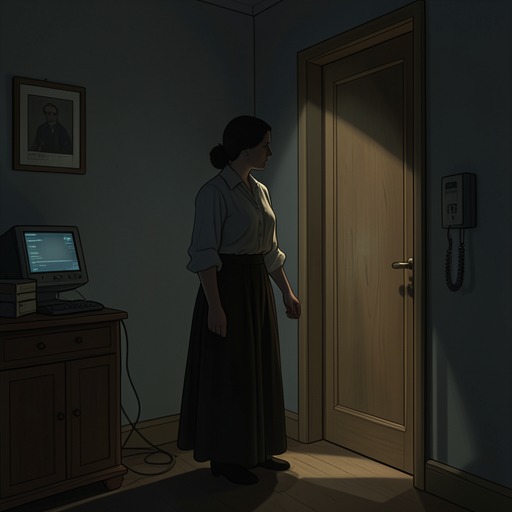
Nina’s Secret Help to Millie and Cover-Up After Andrew’s Death
The HousemaidNina Winchester and Millie Calloway’s relationship moves from employment and deliberate manipulation to a consequential act of protection. Nina hires Millie with a hidden purpose: not simply to replace her in Andrew Winchester’s affections, but to put a possible means of Andrew’s death into Millie’s hands. Millie does not know the real design. Once Andrew is dead, Nina helps her leave and lies to investigators to keep her from becoming a suspect. Their connection is therefore defined by an imbalance of knowledge, but its final turn is Nina’s decision to accept danger herself rather than leave Millie exposed.
Employment and Unequal Knowledge
Millie enters Nina’s household as a worker whose employment is already entangled with personal danger. At first, Nina’s apparent hope is that Andrew will fall in love with another woman and finally let Nina go. In that version of the plan, Millie is not merely an employee: she is a possible substitute wife, recruited into a marital escape strategy without being told what role Nina imagines for her.
The imbalance is sharpened by what Nina knows about Millie. She regards the sweetness Andrew sees in Millie as an incomplete picture and has looked into the violent episodes in Millie’s past. Nina knows that Millie has been sent to boarding school and imprisoned, and that she was fired from a waitressing job after punching a coworker. Andrew, Nina believes, will not investigate that history or understand what Millie may be capable of. Nina’s judgment makes Millie’s past part of the calculation behind the relationship: she is not only a potential replacement but, in Nina’s private assessment, someone who might act violently.
From Replacement to Intended Instrument
Nina later distinguishes her original explanation from the real reason she hired Millie. The hope that Andrew would fall for another woman was not, she says, why she hired Millie, gave her a copy of the room’s key, or left pepper spray in a blue bucket in the closet. Nina’s eventual disclosure is that she hired Millie to kill Andrew, while keeping that purpose secret from Millie herself.
The key and pepper spray give the relationship’s hidden design concrete form. They are not just household objects: Nina places access and a potential means of defense within Millie’s reach, while withholding the plan that gives those items their intended significance. This makes Nina’s help deeply compromised. She is preparing Millie for a dangerous confrontation without her knowledge, and treating Millie’s actions as a possible route out of Nina’s own marriage.
Millie’s affair with Andrew further complicates that arrangement. During a frightening supermarket security stop, Millie worries that a shoplifting accusation could bring the police and violate her parole. In that vulnerable moment, she imagines that Nina might welcome a way to get rid of her and might regard the accusation as revenge for Millie having slept with Andrew. This is Millie’s fear and speculation, not proof of Nina’s intentions in that incident; it nevertheless shows how insecure Millie’s position has become. Her criminal record and parole make even a mistaken suspicion feel capable of undoing her freedom, while her employment ties her to the household at the center of the danger.
Disclosure After Andrew’s Death
After Andrew is dead, Nina and Millie confront the concealed plan directly. Millie asks whether Nina left the pepper spray for her and whether Nina hoped she would kill Andrew. Nina confirms both. Millie then asks why Nina did not kill him herself; the evidence records the question but gives no answer. The exchange turns their relationship inside out: Millie learns that the objects and apparent assistance she encountered as an employee were part of a plan in which she was meant to become the instrument of Andrew’s death.
Nina does not pretend that Millie has failed to carry out that intention. She recognizes that Millie did kill Andrew and that Millie could spend the rest of her life paying for it unless Nina helps. Her response is to urge Millie to get out before Nina changes her mind. Millie leaves, and Nina remains alone in the house with Andrew’s body before calling the police. The departure is not a reconciliation scene; it is a choice made under the immediate pressure of Millie’s exposure and possible punishment.
Cover-Up and Change in the Relationship
Nina’s protection continues through the account she gives the police. When asked about Millie, she says she gave her the week off because her daughter was at camp and that she has not seen Millie all week. Nina knows this is a lie and understands that investigators may try to contact Millie; she is trying to remove Millie from the suspect list as best she can. Her invented account is consistent with what she had already told Millie she would claim: that Millie was away from the house and had been given the week off.
The cover-up matters because it reverses the earlier direction of Nina’s manipulation. At first, Nina secretly places Millie in danger to pursue a way out of her marriage. After Andrew’s death, she uses her own account to shield Millie from the consequences. Nina invokes her previous hospitalization for mental-health issues when explaining that she has a chance while Millie does not, and says that, in the worst case, she could return to the psychiatric hospital. She is willing to let suspicion fall on herself rather than leave Millie with the same prospects.
Significance
The relationship is neither uncomplicated solidarity nor simple hostility. Nina’s plan instrumentalizes Millie, exploiting the fact that Millie does not know why the key and pepper spray have been placed within her reach. Millie’s fear that Nina might use a parole violation to get rid of her also exposes how little security she has as a former prisoner dependent on work and vulnerable to police involvement. Nina’s later decision to mislead investigators does not erase the earlier betrayal; it changes what she is willing to do for Millie once the danger becomes real.
Their final bond is expressed through actions rather than a promise of closeness. Nina tells Millie to escape, gives investigators a false version of Millie’s absence, and remains behind to face the immediate aftermath. For Millie, the disclosure reveals that Nina’s apparent assistance had carried a lethal purpose. For Nina, helping Millie leave becomes a way to accept responsibility for the risk she helped create. The relationship ends in separation, but with Nina attempting to protect the woman she had first recruited, unknowingly, into her plan.